


Emperor TIBERIUS, 2nd Emperor of Rome (14 – 37 AD)

Stepson of Augustus (first Emperor of Rome), Tiberius was an impressive military man, with several significant battles under his belt. He wasn’t, however, very well suited to civilian life in Rome, where his mother, Livia, insisted he stay toward the end of Augustus’s life (to ensure that he inherit the throne). To further secure this inheritance, Livia also had Augustus (never fond of his awkward stepson) force Tiberius to divorce his wife, whom he loved deeply, in order to marry Augustus’s adulterous – and fun – daughter, Julia. The marriage was a fiasco, however it served Livia’s purpose perfectly. Pliny the Elder named Tiberius the “Gloomiest of Men”.
Second emperor to the Julio-Claudian Roman Empire, Tiberius was a sick, corrupt, perverse man, and very fond of his equally sick, corrupt and perverse nephew, Caligula, who would inherit Tiberius’s throne. From Seneca to Suetonius, Caligula was a depraved, insane tyrant. The latter accused Caligula of incest with his sisters, Agrippina the Younger, Drusilla and Livilla and say he prostituted them to other men. Famously he also is said to have made his horse, Incitatus a consul and appointed him a priest.

The Roman Empire, established just a few Emperors before, was going to hell, until the stammering, stuttering cripple, Claudius inherited the throne (the Praetorian guards named Claudius Emperor in 41 AD after Caligula’s assassination, as he was the last male adult of the Julio Claudian left). He proved to be an able leader, focusing on canals, aqueducts, bridges, balancing power back toward the Senate (after Tiberius and Caligula had purged much of Rome of a voice), and winning many provinces under his reign (Thrace, Pamphylia and beginning the conquest of Britain to name a few). Sadly for the Roman Empire, Claudius was married to another Sour Grape and was followed by nephew Nero (reigned 54 – 68 AD), who was yet another sick puppy. The last of the Julio-Claudian Dynasty.


Yesterday El Argentino and I went to the Louvre to nose about an area we’re both shamefully ignorant of – the near eastern antiquities. I probably couldn’t come up with one of Alexander the Great’s campaigns, and the area between the Euphrates and the Tigris rivers (Mesopotamia, Sumer, Babylon, etc) is buried down deep in my memory. The last time (and first time) I really gave the dawn of civilisation a thought was probably in the 6th grade when we had to study the invention of the wheel, Gilgamesh and irrigation. This last one quite an abstract concept for pollution spouting city kids.
But those early folk, from Cyprians to the Levant in Palestine and Jordan, have provided me with some wonderful THATMuse fodder – the Bestiary (fantasy animals, such as unicorns and griffins) hunt that I’m working on now, especially. And El Argentino, a buff of all things Roman and Greek (be it a military campaign, tragedy, philosopher or amphora pot, he’s your man) feels like he needs to round out his education for when the kids start asking questions.
Over the next week I’ll feature a few of the Near Eastern treasures that we came across. And who knows, perhaps one of them just might pop up in one of the themed THATMuse Louvre treasure hunts!

Meet Ain Ghazal. At 9000 years old, Ain is the earliest work that the Louvre has in its possession. And actually, Ain is only with the Louvre for 30 years. The Jordanians have generously lent him to the Louvre for 30 years (although I thought it was funny that some Louvre curator arrogantly mentioned that ‘this loan would be renewed by tacit agreement’). 32 of these cute little fellows were found in two separate pits, after a 600 meter road was built across the archaeological dig.
From looking them up on Wikipedia, apparently some of these Neolithic people buried their dead under the floorboards in their homes (later pulling the skulls out), but most of their dead were just thrown in garbage pits where domestic waste was trashed… Throwing grampa in the trash, hmm… Rather detracts from the allure to these ‘cute little fellows’, don’t you think?


Because my mother was an art historian, we spent at least part of each weekend prowling European painting collections across New York. I grew up in the West Village and associated uptown with The Met and Frick. To keep me quiet, she concocted all sorts of art games, which I’ve been handing down to my 4.5 year old, Storsh (he thinks of the Louvre and British Museum as playgrounds).
She did such a good job of it that I not only got my degrees in Art History, but when I had Storsh, a premature worry set in over what his relationship to art and museums would be. In his first year of life, I started a company called THATLou, which stood for Treasure Hunt at the Louvre. Now awaiting number two, we’re building THATMuse for museums in London. Our soft launch was generously commissioned by the British Museum, where I hosted a “Friday Late” entitled The Art of Play: A Treasure Hunt Challenge, which took place last week, on 11 September.
“Scour the wall of postcards for their five favourite pieces before setting off to find those paintings”
In my experience, children love museums if you know how to engage them. Here are some of my top games to keep them interested when you visit the painting collections.
The Postcard Game
If you’re travelling and it’s a collection you don’t know well, go to the gift shop before you visit the museum and have your children scour the wall of postcards for their five favourite pieces before setting off to find those paintings.
For older children
Ask them to find the paintings featured on the postcards within the museum by looking at the country/century of the work on the back of the postcard and finding it on the map. This will develop their navigation skills and give them a layout of the space.
For younger children
Have them pose as the subject for a photo with each work and postcard. If they’re in the habit of taking photos with your phone, trade roles with you posing as the silliest character in the painting. They will enjoy looking back at the photos later.
The Category Game
Find a bench in the museum lobby before entering and ask your kids to choose an animal, a type of food and something like grotesque noses (Storsh loves this one) as your categories.
“Giving them a sense of purpose helps stretch their attention – and your visit!”
Write your categories down then see how many of those animals/foods/body parts your children can find throughout the visit. All kids like collecting things, and having them keep count by writing a line every time they find their item is rewarding. And of course, giving them a sense of purpose helps stretch their attention – and your visit!
The Fashion Game
Before leaving the house, go to your wardrobe and ask your children to feel a variety of materials – scratchy wool, smooth silk, heavy satin, luscious velvet, soft fur etc – the breadth depends on the size of your wardrobe…. Choose one material or more and (assuming it’s not an evening gown!) wear it to the museum so the kids can look at the collection from a tactile perspective. Ask them whether they think it looks real.
The Saint Game

Every time I visit a museum with Storsh, we latch onto a saint and their attribute and devote our whole visit to finding that saint in various paintings. At 3, Storsh started out with St George, easily identified for killing the dragon from a horse. Each time we found a St George, Storsh would make the wild hissing sound of the dragon blowing fire. Sometimes I’d get on all fours and neigh wildly like George’s horse. The more vivid the enactment, the easier to remember the story.
“Quick, show me what Salome does?”
Slowly, one per museum visit, I added in St Michael and St Margaret, both dragon killers but without the horse. Then St John the Baptist. The bloodier, the better. I tend to quiz him on site, so that his connection to the painting is clear, “quick, show me what Salome does?” Sometimes Storsh draws his fingers across his throat with quick precision for a good beheading, other times he dances – much to the bemusement of the guards.
My Insider’s Guide to Paris with Kids

When people think of going to Paris, they often think of it as a romantic destination (which it is), but it is also a fantastic place for families and if you’re planning a spring getaway over the Easter holidays, then a quick hop over the channel could be just the escape you need. I’ve lived in Paris for 12 years now and have explored it exhaustively with my 5-year-old son Storsh, who loves this wonderful city as much as I do. Here are some of my favourite family-friendly gems in Paris for you to explore too. You never know, you might even have time for some romance….
Parc de la Villette
Up in the 19th Arr., straddling Canal de l’Ourcq, which hosts the Paris Plages (city beaches) in the summer months, is the reclaimed industrial landscape-turned-futuristic Parc de la Villette. There are plenty of imaginative kid-friendly pieces here, from an enormous dragon slide to a verdant bamboo maze and it is a fantastic place to wander through in spring.
While you are there, don’t miss the amazing interactive children’s museum, Cité des Enfants (closed on Mondays; buy tickets in advance), which sits on the west side of the canal. If you ever manage to drag the kids away, there is an enormous Géode cinema just outside, which shows most of latest I-Max films in an English version too. Also nearby is a real submarine for the boys in your family to explore – my son Storsh’s favorite part!
A new addition to Paris’s cultural landscape is the Philharmonie de Paris, built by Jean Nouvel, which has some great children’s programs (from 3 months-3 years (sound & instrument discovery), to 7 & up (“From Beatbox to Mozart”). It’s worth checking out their website ahead of time (http://lavillette.com/) to find treats such as the Villette en Cirques complete with magicians, acrobats and the lot (Running till 17 April, tickets range from 10€ to 26€).
Metro: Corentin Carious (line 7) and Porte de Pantin (line 5).
Website: lavillette.com
Jardin d’Acclimatation
With Disneyland and the like banned from my childhood, being allowed to go to the 19thC Jardin d’Acclimatation always made Paris a favourite city of my youth. As it’s out in the Bois de Boulogne (the suburbs of Neuilly) it’s well worth arriving on the “Petit Train”which departs from Porte Maillot (17th Arr.). The toot of the horn and chugga chugga choo choo never ceases to delight Storsh.
The park rides range from standard modern play equipment (target games, a mirrored fun-zone) to more antiquated novel pieces (from the more acceptable TinTin section to a more historic – read possibly objectionable – jungle boat ride with colonialists in pith-helmets & natives sitting in the grass).
With plenty of picnic tables, there’s also a farm-inspired café (and a farm with live farm animals!) or more the modern Angelina for lunch. If you’re going all the way out there, be sure to allot time to Frank Gehry’s fantastic new Fondation Louis Vuitton, replete with concerts, exhibitions and estaurant Le Frank, all nestled into the Bois de Boulogne. Open 10am -6 pm, 5.90€ for entry & Petit Train ticket combined, not including rides which are 2.90€ or you can buy a carnet).
Metro: Sablons (line 1) or Porte Maillot (line 1 or RER C)
Website:jardindacclimatation.fr

Ballon de Paris
Skip the lines of the Tour Eiffel and take in a fantabulous view of Paris from a tethered hot air balloon. Getting you off the beaten-track, the Ballon de Paris rises about 150 meters, delighting kids no end. Anchored to the 1992 Parc André Citroen (which abuts the Seine in the 15th Arr.), the park also has ping pong tables and a fun water distribution fountain that kids can have a good romp through, darting around – or through — the playful water jets. Before heading down there, check the website for wind conditions though. Fares are 12€ for adults, 6€ for children ages 3-11, toddlers under 3 are free).
Metro: Javel or Balard / RER C Javel or Boulevard Victor (the park’s address is 2 rue de la Montagne de la Fage 75015 Paris).
Website: ballondeparis.com
Vedette du Pont Neuf
I always recommend planning a Seine cruise before or after a half-day at the Louvre (where you can also take part in one of my THATMuse family treasure hunts at the Louvre) to give the kids a rest from walking & standing. The closest boat to the Louvre has the benefit of being moored off the Pont Neuf (Paris’s oldest bridge, despite its name, “New Bridge”) where there’s a precious little patch of green, Square du Vert-Galant, right on the water’s edge, good for an energy-spending frolic before and after the boat ride – or for a baguette and stinky cheese picnic.
To play it safe perhaps pick up a Jambon Beurre (ham and butter baguette sandwich) in case the kids are resistant to being initiated to any of France’s delicious, but sometimes strong 350 (plus!) cheeses. The boat offers seating outside (upstairs) or in, both areas having a multi-lingual tour of the sites you’re passing over the hour-long tour.
From 15 March- 31 October the Vedette du Pont Neuf runs every 30 minutes from 10:30 am to 10 pm (the rest of the year it runs on the hour). Tickets are 14€/adults, 5€/kids (aged 4-12) when purchased at the dock, but better prices are available online (9€ in the morning, 11€ in the afternoon).
Website: vedettesdupontneuf.com
Jardin des Plantes
The 17th Century Botanical Gardens are brimming with well-documented plants, trees and splendid allées flanking either side of the 23.5 hectares (69 acres). For kids there’s the 18th century Zoo (originally with animals from the royal menagerie at Versailles), a delightful Art Deco Winter Garden (a hot house is Serre in French) with glass galleries of exotic plants from all corners of the globe), and of course the Natural History Museum comprising 4 main galleries (the Grande Galérie de l’Evolution, Paleontology, Entomology and Mineralogy Museums) is a dusty delight. Behind the hot house, kids can burn some energy and inspire some hide-n-seek imagination in the spectacular labyrinth of hollowed-out bushes, crowned by a gazebo.
Metro: Gare de l’Austerlitz (line 5, RER C), Jussieu (lines 7 & 10)
Website: jardindesplantes.net

The Three Graces

Marble, H 1.19m (3ft, 10in) x W 85 cm (33 in)
The Graces, according to Seneca, stand for the 3-fold aspect of generosity the giving, receiving and returning of gifts of benefits. Three daughters of Zeus, some identified them as Beauty, Charm and Joy. Many myths had them presiding over banquets and gatherings, primarily to entertain and delight Zeus’s guests. These are a Roman copy from the Imperial era (approximately 2nd Century AD), after a Hellenistic original from the 2nd Century BC. Nicolas Cordier (1565 – 1612) restored them in large part in 1609 for Cardinal Borghese (Did you catch that? It’s a THATLou hint… that this marvelous trio is a part of the Borghese collection). Napoleon acquired a considerable part of the Borghese collection in 1807 from his impoverished brother-in-law, Prince Camillo Borghese. 344 antiquities in total made their way from Italy to France. Yet another example of how a French monarch (don’t forget Francois Premier pulling over the Italian renaissance) reaped the benefits of Italian artistic talent — and Italian financial incapacity.
And remember during the hunt NO looking at the internet – so you may want to remember this Room 17, Ground Floor, Sully Wing address! And while I’m at giving Bonus Question hints away, who do you think is prettier, these Three Graces or the scandalous Paulina Borghese, Napoleon’s sister and Camillo’s wife?
All “treasure” per clue-manual have that up above in bold – the title, period, country of the piece, and when an artist is known, his/her name.

Last time we wound our way from considering the Prado and Spain in the general, to zeroing in on a contemporary replica of Leonardo da Vinci’s Mona Lisa. In our last post we shamelessly lingered on poor Leonardo’s sex life (with the weak excuse of saying “hey, the Prado La Gioconda may have been by this pupil / servant / lover, Andrea Salai, so we better delve into some sodomy charges, right?”). In so doing we also trashed Leonardo to a small extent to say that THATLou prefers plenty of Leonardo’s contemporaries. In other words, we’ve really been all over the place, from Madrid to Paris, and through Leonardo’s boudoir. Now we aim to turn a slightly more positive note, one which isn’t quite so NY Post Page Six, or Hello!Magazine trashy. And we can also shake this ‘we‘ing. What, do we think we’re royal or something, with all this smut?

Let’s start with touching ever so briefly on some examples of masterpieces by Leonardo’s contemporaries. da Vinci studied in Verrocchio’s Florentine studio alongside Pietro Perugino, Sandro Botticcelli, and one of my all time favourites, Domenico Ghirlandaio. I won’t examine any of these three painters in depth, just want to drop you off with some of their paintings herewith. And then our next post, concerning Andrea Salai, will be the conclusion to this round-about Prado Mona Lisa series. It’s timely to consider Salai, as his paintings may just become a spot more valuable if conservationists decide that the Prado’s La Gioconda was by his hand and not by Francesco Melzi.
My favourite painting at the Louvre by Domenico Ghirlandaio (1449 – 1494) is constantly being lent out. I guess this is a tribute to how good it is, but I find it very annoying indeed when I find the flimsy little paper hand-scribbled by some curator apologising for the fact that it’s gone missing for another few months. It’s a great painting. Despite his grotesque nose, the Old Man’s look is so quiet and calming as he considers his grandson. You can nearly see him thinking.

Another Leonardo contemporary who I prefer is Sandro Botticelli (1445 – 1510). Though I didn’t include his Louvre Venus and Three Graces when I was considering various Three Graces in July (including the recently-discovered Three Graces by Cranach ‘s – which is just unsurpassable), I’ll take this complete non-sequitur as a chance to include it herewith. Couldn’t you picture this Venus and Three Graces in at least one THATLou? Perhaps a Ladies at the Louvre hunt, or better still the Love Hunt which is due to take place for couples and lovey-doves the evening of Friday 14 December?

Pietro Perugino (1446 – 1523). He’s a tricky one to choose a fave at the Louvre, because there are so many good ones. There’s always something tactile for me with Perugino. The paint is so smooth and the colors so uniform that he makes me want to stroke the canvas. Anyway, if I have to choose, I’ll go with his St Sebastian (which as a total aside, I was interested with how many St Sebastians we came across at both the Thyssen Bornemiszia, as well as the Prado. Do the Spanish have a thing for him, perhaps?).
After today’s segue-way of some top-tier Renaissance painters, the next post will take a step down (or back?) and worm its way back to the likely painter of the Prado’s version of La Gioconda – and will take a look at Andrea Salai’s paintings. That Little Devil!
The Prado’s Gioconda

The other day I touched on Spain’s Span Across Europe in the general. It’s true that Spain’s reach was just so broad that it’s hard to know what to focus on at the Prado (the royal collection reflecting the crown’s omnipresence). However, what’s better to linger on than a hermetically sealed connection between the Prado and the Louvre? And what better represents the Louvre than Leonardo da Vinci’s Mona Lisa? It’s a painting I generally avoid – in my treasure hunts, or in person at the museum. Too much hype surrounds her cryptic eyes, too much money spent on magnets with her “enigmatic” smile – not to mention the flocks of publicists who’ve promoted a ‘famous author’, as St Sulpice refers to Dan Brown, and his tours to the Mona Lisa. (and yes I do love St Sulpice for thinking it below them to even name this famous author, resentful of the many tourists who march right past their Delacroix frescoes or Pigalle Baptismal font to find the P/S in the stained glass + Meridian line mentioned in the Da Vinci Code).
But it feels like a knee-jerk reaction to Lisa’s fame to avoid her entirely. So while trawling the internet to soak up all-things-Prado I was truly floored and excited to read about last February’s discovery of a contemporary copy of the Mona Lisa, found at the Prado.

The picture is more than just a studio copy— apparently it changed as Leonardo developed his original composition. Infra-red reflectography images of the Prado version allowed conservators to see beneath the surface of the paint, to the under-drawing. Apparently the two versions were painted next to one another and painted au même temps! Which means the copy must have been by an apprentice in his studio.

There was a dull black background that left a deadening effect on the Prado Mona Lisa (who’s generally believed to have been Lisa Gherardini, the wife of the Florentine cloth merchant Francesco del Giocondo – thus the French and Spanish name for her La Joconde/Gioconda, respectively). Conservationists aren’t clear on why the black over-paint was there, but believe it was added in the 18th century.

In 1992 Art Historian José María Ruiz Manero published a paper called “Italian Painting in 16th Century Spain” where he surmises that the painter was Flemish and that it was probably painted in Northern France. Because the Prado version’s wood was assumed to be oak (rarely used in Italy at the time) Northern Europe was an entirely plausible guess. However, last year the panel was found to be walnut, which was used in Italy — as was poplar, what da Vinci’s Mona Lisa is painted on.
What I don’t understand is why all of the newspapers refer to it as a copy, as in this Guardian article or this Time Magazine piece… If it was painted simultaneously and developed along side Leonardo’s, why isn’t it simply thought of as another painting of the same subject, by a lesser painter?
Even more interesting than this is who painted this Prado version of the Mona Lisa. Though it hasn’t been confirmed (the discovery was only unveiled at a National Gallery (London) conference of conservators, most people seem to believe it was by Andrea Salai, an assistant to and perhaps Leonardo’s lover. More on that for our next visit!


The Prado, like the Louvre, takes a bit of context. It is a Royal Collection, and the royalty in Spain was; Well, full of stories, to say the least. The Spanish had an enormous empire, but two provinces of supreme artistic value were Naples and the Lowlands (they had the Spanish Netherlands from 1579 – 1713 – roughly corresponding to Belgium and Luxembourg).
In 1700 the mentally infirm Hapsburg King Charles II of Spain named Louis XIV’s second grandson, Philip (Duc d’Anjou), as his heir. At 16, Philip V (formerly le Duc d’Anjou) was the first of the Bourbon kings of Spain. Needless to say this forged a Spanish-French alliance to the highest degree… which of course off-set a balance of power in Europe, which in turn brought on yet another war. This one aptly called the War of Spanish Succession (1700 – 1715). I will leave a proper background to this for another time, but if you’d like just the lightest touch of context I recommend http://www.spanishsuccession.nl/ (please note the NL in this URL!). Before moving on, however, I’ll include a painting of Charles II to give you a sense of just how mentally infirm he looked, poor inbred man that he was. He looks as contorted, deranged and plain-old-scary as the Appalachians in the film Deliverance.

Suffice it to say the 17th century saw an artistic surge in the Lowlands with Pieter-Paul Rubens (knighted by Philip IV), Anthony Van Dyck and a myriad of wonderful still life painters such as de Heem (as touched on in the post, Food in Art!), all of whom had either a sojourn to Spain or were directly affected by the Spanish crown.
The inimitable Spanish presence in Naples and Sicily (later called the Kingdom of Two Sicilies) had a profound impact on both the Spanish and Neapolitan Baroque. To name just a few big hitters the magnificent Baroque painter Jusepé de Ribera flourished in Naples (though proud of his Hispanic roots, apparently he signed some of his paintings Jusepé the Spaniard”, suitably acquiring the nickname Lo Spagnoletto), Neopolitan painter Luca Giordano was a court painter in Spain for ten years under Charles II (after having studied in Ribera’s studio), Velazquez was sent by Philip IV to Italy, which is considered a turning point in his style.
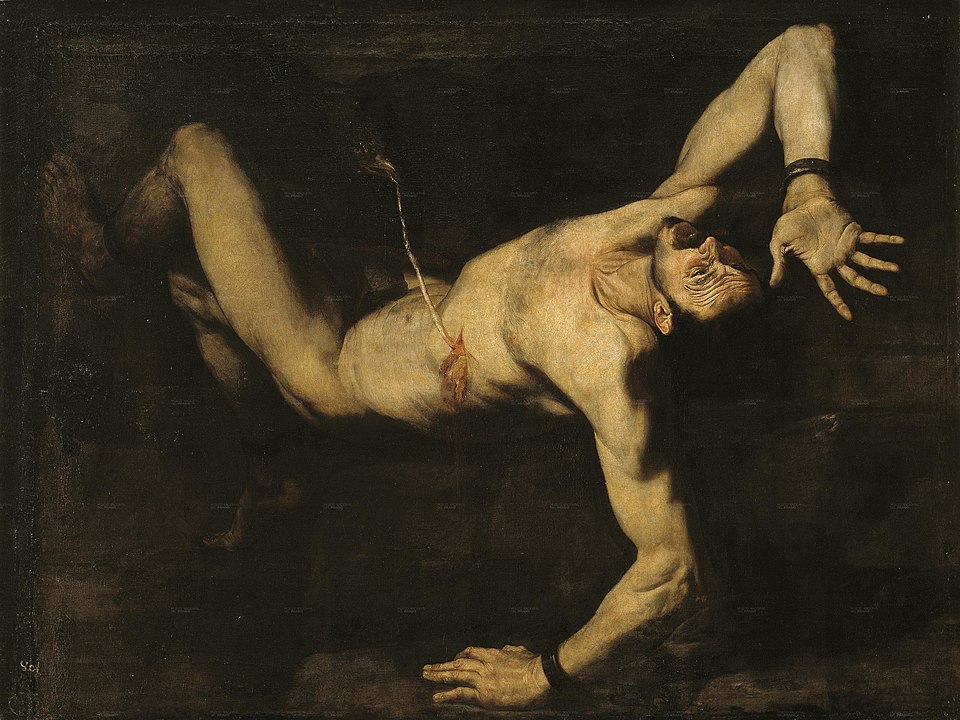
All of this is really just a laundry list of countries that were miniscule on the scale of Spain’s global dominance (think of a small continent across the pond called South America, let alone the discovery of another small space north of those Peruvian gold mines). But both the Netherlands and Italy were hotbeds of the Baroque, and their inseparable connection and influence on and by Spain has been the subject matter of the lives and careers of many art historians.
In great anticipation of beholding each of these masters at the Prado in person, I’ve had a ball brushing up on some background reading. And in terms of my belly and our little trio alighting a plane fast as a gazelle? I’m already packed a day in advance – a rare occurrence!

Going out with a bang, I’m concluding our visit to Darius the Great’s Winter Palace at Susa (which in turn sadly wraps up the Louvre Near Eastern musings which started with Ain Ghazal, the oldest piece at the Louvre) with something big! Nearly matching the Louvre’s gentle Lamassus in height, here’s one COLOSSAL capital.

This COLOSSAL capital alone is 4 meters tall, 1/3rd the size of the column that it topped. Altogether the columns – 36 columns to be exact* – in Darius’s Apadana (Audience Hall) were over 20 meters tall (meaning about 70 feet ceilings, I think). The hall was 109 meters squared. Just look at the size of the beams nestled between the two kneeling bulls: they’re unfathomably large. To help put it in context, El Argentino said that the bull’s eye would be looking straight into our kitchen window – we live on the 4th and final floor of a typical Parisian building dating to 1810. The trek up the 4 flights each day, my toddler Storsh in hand, make me all the more sensitive to such lofty height.

The variations of colour in the capital’s stone is due to the fact that it was reconstructed from fragments of several columns by Marcel Dieulafoy, the archeologist leading the 1884-1886 excavation. To demonstrate the unification of the different parts of Darius’s Persian Empire, influences were taken from all over. The stone masons were Greek and Lydian, and the architects Persian. The double volutes with rosettes was taken from the temple of Artemis at Ephesus, yet the pair of bull protomes are purely Mesopotamian, representing cosmic equilibrium. And let’s not forget Egypt, a significant part of his 50-million-person strong Achaemenid Empire – that basket-like ensemble of palm fronds are a reminder that the Egyptians had been peed on by Darius. Again, just one capital is a Benetton of sorts, a little UN-melting pot of cultures as described in the last post, which mentions which exact room these treasures can be found in… Helpful no?

On the globe-trotting front, apparently one of these fine bulled capitals has found itself far far away – from Paris or Iran… El Argentino is from the leafy hood of Palermo, Buenos Aires. Our favourite part of the 3 de Febrero park, also known as the Bosques de Palermo (the woods of Palermo), is the Rose Garden. Though we’ve been to feed the ducks and picnic in the fragrant green plenty of times, I hadn’t noticed that they have one of these double-kneeling bulls perched in place, above a fluted column. This one is apparently from Darius’s father, Cyrus. In 1972 one of the Pahlavi Shahs gave the 102-ton column to Buenos Aires, for nuclear good-will no doubt (the Argentines had advanced nuclear technology in the 60s and 70s). Anyway, how this behemoth passed my notice says heaps about how open my eyes are!

To close this Near Eastern Antiquities musing, I just wanted to say a word on Susa, the town where Darius chose to make his administrative capital and Winter Palace. Also known as Shushan, or in Greek Susiane, Susa shares the “oldest” element that Ain Ghazal opened our Near Eastern visit with: Susa is among the oldest continuously inhabited cities in the world, starting in 4200 BC. There are also traces of a village there around 7000 BC. We think of Egyptian art as old, but the first traces of it were 2000 years later, in 5000 BC.

Apart from making a star appearance as Bestiary (fantastical animals, such as unicorns, dragons and griffins, etc), Darius’s palace at Susa could certainly appear in plenty of other THATLous – such as Animals in Art or Kings + Leaders, what with Darius’s reach (his empire stretched from India to Greece) as mentioned in the last post you never know!
All photos were taken from Wikipedia and Google and are in the open domain.
* And yes, when things are in bold, often that means it’s going to answer a precious bonus question!


Ok, enough horsing around here, we’re going to cut strait to the chase and give you a sample, a teaser, a piece of the hunt! Which THATLou, you ask? Well, the below morsel is particularly great because it could fit into any number of near-future hunts.
Meet the Cross-Purpose Greek Pot, a world-famous Dinos by the Gorgon Painter…
There are two THATLous that this Dinos would be perfect for
– as the previous Gorgon post discussed, the very word the Greeks gave these ghoulish creatures means Horrible or Terrible. Terribly appropriate for Beauty + the Bestiary THATLou. Bestiary has been touched on here and there in past blog posts with Darius the Great’s wonderful Frieze of Griffins, and those gentle protecting Lamassus).
– And where would you find a Dinos other than at a symposium (FEAST) that the Greeks lingered over endlessly (appropriate for Foodies in France who may just opt to see the Louvre from the perspective of Food + Wine)? Of course a Dinos fits in there perfectly, to ground the floating debauched bacchuses from flying about, perhaps a bit too much wine needs some water!
Anyway, enough chatter from me. Here’s your hint, take it and run for the THATLou prize!

ATTIC BLACK-FIGURE DINOS, by the GORGON PAINTER
Cerveteri (from Athens, Greece), Circa 580 BC
Clay, H 93cm
A Dinos was used to mix water and wine – and stood on a tall stand so the servants didn’t have to stoop during the long banquets that Dinoses were made for (The Greeks drank a lot of wine, but always diluted). This early Attic Dinos is of particular importance because it gave the Gorgon Painter his name – referring to the scene on one side of the pot with Perseus being chased by the Goggle-Eyed Gorgons, after he murdered their sister Medusa, shown collapsing after Perseus lobbed off her head: Death taking hold of her before our very eyes. Remember Medusa had turned all those who dared look in her eyes to stone. Perseus was clever enough (with Athena’s help) to approach her using the reflection of his shield like a rear-view mirror, thus avoiding his demise. The Gorgon Painter is one of the earliest masters of the Black Figure technique and a pioneer of the Attic tradition of figurative decoration on pottery. There is a convergence of influences on this Dinos – among the series of bands of friezes with alternating plant motifs and animals, including bestiary such as sphinxes and mermaids there are also male figures, a reference to the Oriental tradition of the Master of Animals.
POINTS: XXX (depends on the hunt)
Denon, lower ground floor, room 1 (in the “Pre-Classical Greek” section next to the Islamic collection)

This is the only vase by the Gorgon Painter – who was prolific – to depict a complex narrative, but also the first Attic vase to do so at all… Don’t nod off — this is interesting enough stuff folks, to merit some bonus points!
For a background on Athenian red and black-figure vase painting the Met has a thorough summary here. As for their shapes, Wikipedia has a wonderful collection of photographs with their names – which if you click on the names will of course lead you to their purpose. Click here for that visit.
Remember if things are in bold it may just mean they’ll help you out with bonus questions embedded in your treasure hunt… In other words, worth taking note of!


Tomorrow night is the first of a two-part THATLou series hosting an international law firm. Having lawyers, accustomed to scrutinizing small print, go a-hunting excites me no end, especially when they’ll be after imaginary creatures like bestiary (for balance they’re also after beauty). Will they catch this hint? Is that one too obvious? What about this bonus question — too involved? I’ve had loads of fun considering it all. And as a free-be to these fine solicitors, I’m posting the most involved bonus question here on the night before. Ironically, given their trade, they probably won’t have time to read beforehand, so I guess it’s good they’re clever enough to think on their feet to write a limerick in honor of one element of either of the below tales, both attached to the below sample treasure (NB this is expanded text, no piece of treasure has more than 10 or 12 lines, as you don’t have enough time to digest more whilst out on the prowl):

THE RAFT OF MEDUSA
Théodore GÉRICAULT (Rouen, 1791 – Paris, 1824)
19th Century French, H 4.91 x W 7.16m (in other words “Grand Format”)
The ‘Hope of Rescue’ is how Géricault chose to paint this painting, which stands as an icon of Romanticism. The Medusawas the name of a French Royal Navy frigate that set sail in 1816 to colonize Senegal. With over 150 soldiers on board, when the ship wreck took place in the Atlantic, they had to build rafts due to a shortage of lifeboats (talk about health and safety!). Only 10 people survived the 13-day odyssey, and the stories of cannibalism and brutality which ensued caught the fascination of Géricault, as well as contemporary journalists and the general public alike. This French number is famous enough to be studied in any introductory Art History class (please note the composition of two pyramids), but it’s the news story behind it that captures the interest of the general public.
The frigate was named for Medusa, the frightening Greek mythological creature with poisonous snakes for hair (talk about Bestiary!). To name a frigate Medusa in and of itself is a strange choice. Poseidon, God of the Sea, had been madly in love with the Gorgon sister Medusa, but when she spurned his love, he turned both her and her two sisters into monsters with snake hair. Poseidon also placed her in total isolation, by cursing her with the conversation-stopper-quality of being turned to stone if you met her gaze!
Aided by Athena and Hermes, the mortal Perseus went to the end of the world (where Poseidon had exiled her) to challenge Medusa, who’d been making trouble. He cleverly used the reflection of his shield to avert her gazeand protect himself. When he got close enough to behead her, a volcano of blood sprouted, and from each drop of blood sprang more horrible creatures – Pegasus (a winged horse) and Chrysaor (a winged giant boar) – who were believed to have been Medusa’s children with Poseidon. Bestiary spawn bestiary, of course!

So here’s the give away: take an element of this fantastic story – be it 19th Century French frigate or Greek mythology – and spin it into a limerick, for muchos puntos. Now how’s that for impetus for thinking of the quickest rhyme for frigate? Perhaps mitigate? Go to it, Lawyers!
Caravaggio’s 1598 painting of Medusa (at top) is among the most famous images of her in art (rightly so!), and just down the street from where she lives at the Galleria degli Uffizi is this statue of Perseus, with poor Medusa’s brains dangling from her beheaded neck (his perfect frame is standing on her body). My mother always said that what I called dangling brains was in fact her hair, but I say pshah! What child doesn’t like gore – and that gore doesn’t look like snakes, does it? The story of Medusa is also covered in this Greek Dinos — a Greek pot measuring a meter in height and filled to the brim with diluted wine … My those Greeks liked to drink! Both of these pieces of treasure often appear in the same hunt and cross reference each other so to reinforce the story — perhaps highlighting what instrument allowed Perseus to get close enough to slice Medusa’s head off!
This Gericault Raft of Medusa is certainly a juicy number. Being such an iconic piece of French Romanticism (and Louvre “Greatest Hit”) I dare say it also appears in the Public Hunts “All Things Gaul” hunt held every Bastille Day (works only by Frenchmen) and in the Halloween Death hunt.
Here are lovely write ups of the first Halloween Hunt, one in Aussie in France the other in Colleen’s Paris. The former write up includes the following limerick (unfortunately I’m not at liberty to post any of the clever limericks the lawyers wrote due to client confidentiality)
Poseidon the god of the sea
Rarely took time for a pee, but
He pulled down his trunks
Screamed “you are all skunks”
And did it before all who could see
Noted elsewhere in the blog, strictly speaking the term “Bestiary” covers Medieval European imaginary creatures such as Unicorns, Griffins, Dragons, etc. For the purposes of you seeing a broader expanse of the Louvre, however, the Beauty + Bestiary THATLou theme stretches the definition of Bestiary to Egyptian Sphinxes, Greek Centaurs and as you see here, the likes of half-human Gorgons.
Alex ze Great

Our friend Alex applies to anyone thinking of a Kings + Leaders THATLou, of course, as per this adorable photo of our 8 year old Australian Rock Star, Drew, who found him with a punch to the air!
So here’s the clue:
Bust of ALEXANDER THE GREAT (also known as Inopos)
100 BC, Delos Cycladic Islands (Greece)
Parian Marble, .99 cm
Alexander the Great, or rather his 2nd C BC fragment here, is in one of the Parthenon Rooms quite close to the Louvre Icon Venus de Milo (as a “greatest hit” I bet you’ll find her photo on your map!). Before even delving into why we’ve included Alex in the Arts + Science Hunt, go on over and take 25 bonus points for a photo of your team with Venus de Milo. And take a moment to actually look at her, if you can manage the jostle of the crowds!
Initially thought to represent the Cycladic river-god, Inopos (thus the nickname), this bust of Alexander was found on the island of Delos. It is dated to about 100 BC due to the idealized face (which is similar to that of Venus– in their trepanned hair, similar brow-lines, deep-set eyes and slightly heavy oval faces). Alexander is hard to summarize, there are so many great anecdotes about him. He was both cruel (levelling Thebes, to make as an example to all of Greece) and clever (student of Aristotle, Alex learned about geography, zoology, politics and medicine from the age of 13). Alexander brought scientists with him on his military campaigns and sent plant and animal specimens back to his former mentor.
Though he was a “do-er” (having conquered an empire as far-reaching as India before he died, aged 33), Alex also understood the importance of observation. For instance, His father, Philip of Macedonia bought an exceptionally expensive horse, Bucephalus, who he couldn’t tame. Alexander observed that the horse was frightened of his own shadow, so he bet his father that he could mount him, and indeed he did simply by turning him into the sun. Alex was also able to think outside the box, important to solving problems. An oracle had decreed that whoever untied the Gordian knot (which was very intricate without a starting point as it’d been made of cornel bark and had hardened over time) would conquer all of Asia. Frustrated by the knot Alexander simply sliced it in half proclaiming “I have ‘loosed’ it!”. The Gordian knot has since become synonymous with an intractable problem that requires an unconventional solution.
Alexander is included here, however, because of his considerable patronage to new inventions and scientific research. He understood the importance of time for research and study, and that they needed funding, Scientific patronage cannot be overlooked – and who better to represent this than the founder of Alexandria, the new science capital. (which, after his death, was run by Ptolemy (Alex’s former personal bodyguard) and founded the famous Alexandrian Library, for which a significant part of Egypt’s state budget must have been devoted for the support of science; visitors and staff received free accommodation and a government salary with obligation simply to participate in debate amongst colleagues. How’s that for putting priority on the pursuit of Science?
Science-Académie (known as Science-Ac’) was established in 2006 with just a few hundred students. Today this Paris-Montagne Association now stands at 2000 students, enlivening the interest of high school students and pre-BAC kids in Science. Science-Ac was born from the l’Ecole Normale Supérieure (ENS is the French equivalent of MIT, for you American readers), and has generational dons or tutors per each level, PhD candidates doing lab work alongside high-schoolers. Their proximity in age no doubt bolsters the inspiration for the students to further their scientific studies.
Here are two adorable opinions on how to conduct a THATLou strategy on You Tube, as described by Drew (8, photographed above) and his sister Zoe (12), hailing from Australia and out on European trip for 4 months.
